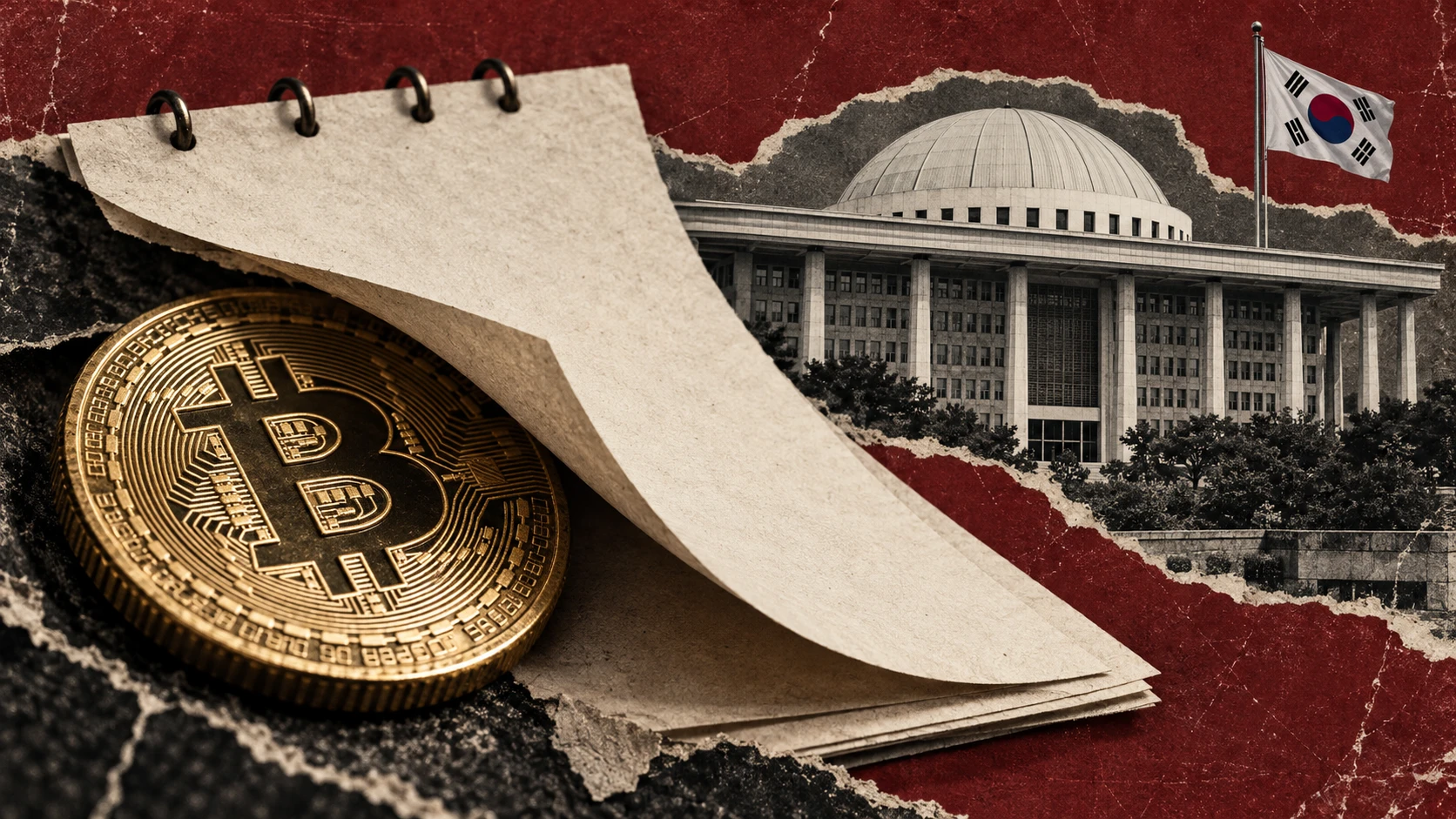
South Korean finance officials are scheduled to meet with representatives from major cryptocurrency exchanges on Tuesday to discuss the nation’s planned tax on digital assets. This meeting occurs as legislative efforts aim to postpone the tax, currently slated for implementation in January.
Expected attendees include executives from prominent exchanges such as Upbit, Bithumb, Coinone, DigitalX, and Gopax, alongside representatives from the Digital Asset Exchange Alliance (DAXA). Government officials participating include Kwon Dae-young, first vice minister of finance and economy, and Yoo Young-jun, director general for digital financial policy at the Financial Services Commission.
The discussion takes place against a backdrop of increasing calls for a delay. Democratic Party of Korea lawmaker Park Min-gyu recently introduced legislation that could push the tax’s start date back by two years. The proposed bill suggests postponing the tax until January 1 of the second year after South Korea begins sharing data under the OECD’s Crypto-Asset Reporting Framework (CARF). With the first exchange data sharing under CARF anticipated in 2027, taxation could potentially commence in 2029 under this bill.
South Korean regulators have previously delayed the crypto tax implementation three times, with the most recent postponement setting the start date for 2027. Industry stakeholders have voiced concerns regarding readiness for the tax. According to an exchange official cited by Yonhap, unresolved transaction rules and insufficient time to prepare necessary infrastructure support a postponement. “Standards for different transaction types have not yet been finalized, and time is running short for practical preparations on the infrastructure side,” the official told Yonhap, adding that “There is a shared view in favor of postponing the start of taxation.”
The current uncertainty surrounding the tax’s future start date and the specifics of its implementation remain key points of discussion.
Why This Matters
The meeting between South Korean finance officials and cryptocurrency exchanges highlights the ongoing debate and uncertainty surrounding the implementation of a planned digital asset tax. The potential postponement, driven by industry readiness concerns and legislative proposals, underscores the complex regulatory landscape for cryptocurrencies in South Korea. The outcome of these discussions could significantly impact the timeline and specifics of digital asset taxation.
Broader Context
South Korea’s finance officials are engaging with cryptocurrency exchanges at a critical juncture, as calls for delaying the digital asset tax intensify ahead of its scheduled January implementation. This dialogue is occurring amidst legislative efforts to push back the tax’s start date, reflecting broader international discussions on crypto taxation frameworks like the OECD’s Crypto-Asset Reporting Framework (CARF).